
British Tea — Four Centuries of a Nation’s Drink
目次The Arrival: 1657–1700
Tea first appeared for sale in England around 1657, at the coffee house of Thomas Garway in Exchange Alley, in the City of London. It was marketed as a medicinal curiosity — expensive, exotic, and largely unknown.
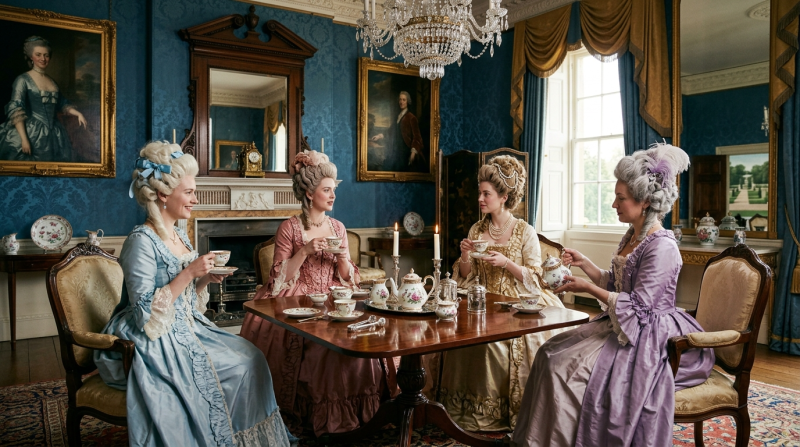
The turning point came in 1662, when Catherine of Braganza, a Portuguese princess, married King Charles II. Catherine had grown up drinking tea in Portugal, and she brought the habit into the English court. Within a generation, tea had become the fashionable drink of the aristocracy.
Yet for most of the seventeenth century, tea remained a luxury. The East India Company held a monopoly on imports from China, and heavy taxation kept prices far beyond the reach of ordinary people. A pound of tea could cost a labourer several weeks’ wages.
The Democratisation: 1700–1850
The eighteenth century transformed tea from an aristocratic indulgence into a national staple.
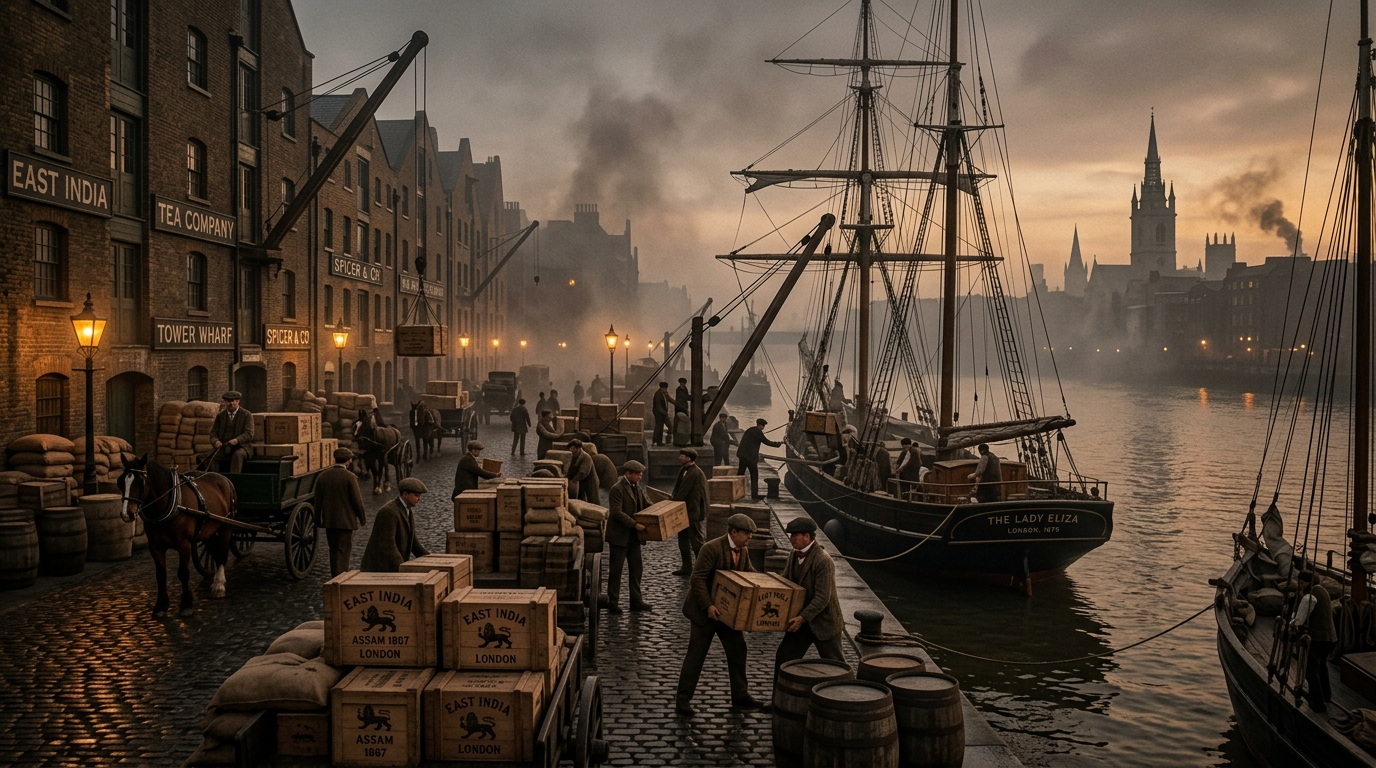
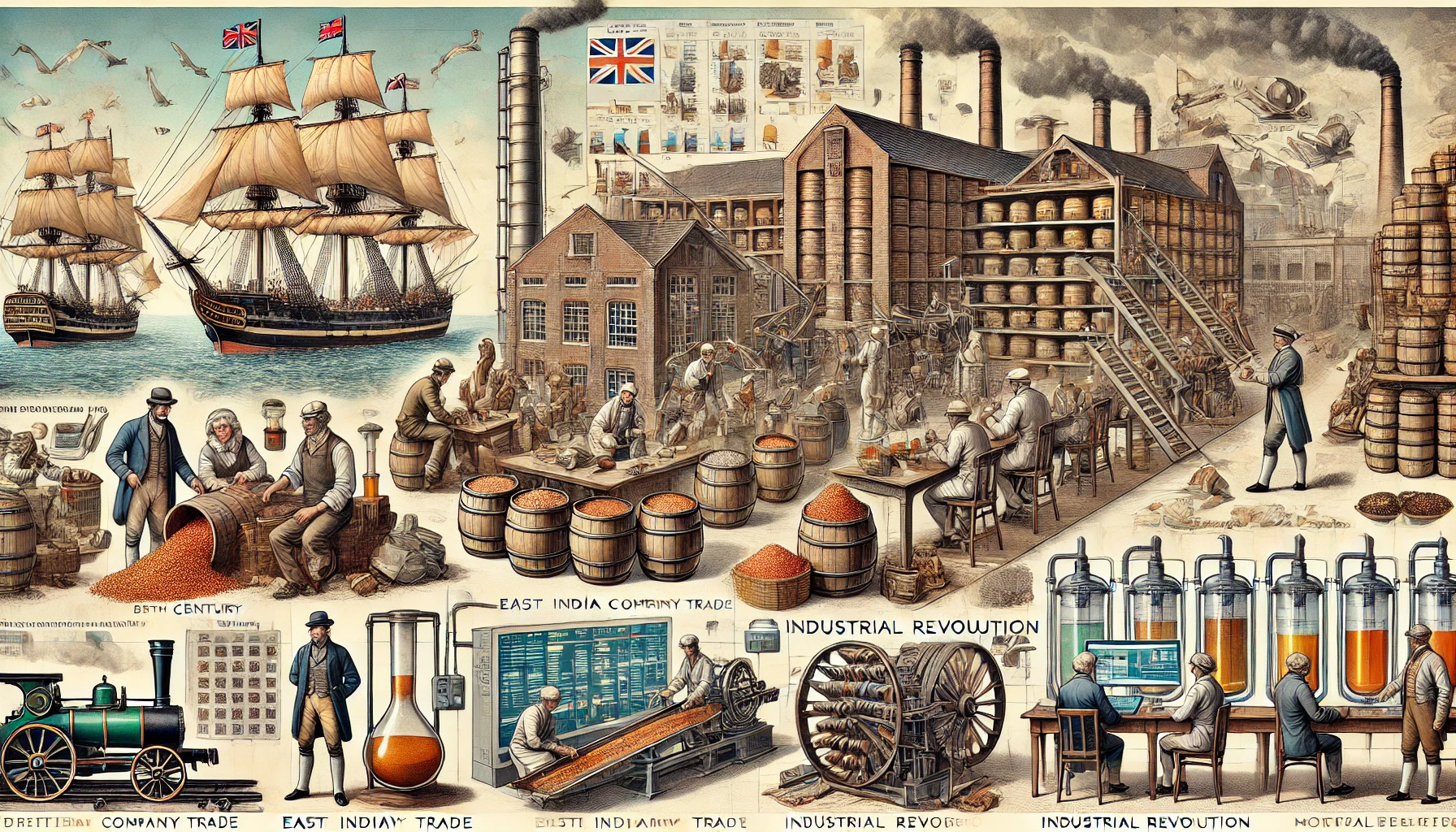
The East India Company massively expanded its imports of Chinese tea, and the infrastructure of London’s docks — St Katharine Docks, Hay’s Wharf, Shad Thames — grew to handle the volume. The famous tea clipper ships raced from China to the Port of London, most memorably in the Great Tea Race of 1866, when the ships Ariel and Taeping arrived within twenty-eight minutes of each other after a fourteen-thousand-mile voyage.
In 1784, Prime Minister William Pitt the Younger passed the Commutation Act, slashing tea import duties from 119% to 12.5%. This single piece of legislation destroyed the smuggling trade overnight and made tea affordable for ordinary British families.
During the Industrial Revolution, tea — sweetened with sugar and lightened with milk — became the fuel of the factory floor. It provided warmth, calories, and a stimulant for workers enduring long hours. By the mid-nineteenth century, tea was no longer a luxury. It was a necessity.
In the 1840s, Anna Maria Russell, the Duchess of Bedford, began requesting a light meal with tea in the late afternoon to bridge the long gap between lunch and dinner. This private habit soon spread through aristocratic society, and what we now call afternoon tea was born.
The Empire of Tea: 1850–1900
The second half of the nineteenth century reshaped the geography of tea.
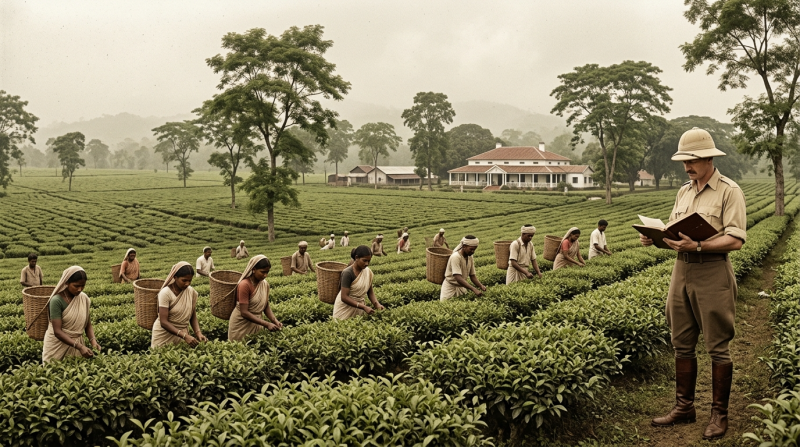
In the 1820s and 1830s, the East India Company had discovered that a native tea plant — Camellia sinensis var. assamica — grew wild in the hills of Assam in northeastern India. Scottish and English planters developed vast plantations, and by the 1860s, Indian tea was flowing into London in commercial quantities.
Ceylon (now Sri Lanka) followed. After a devastating coffee blight destroyed the island’s plantations in the 1870s, planters pivoted to tea. Within two decades, Ceylon had become one of the world’s major tea-producing regions.
This was the era in which the London tea trade reached its zenith. Firms such as Twinings (est. 1706), Fortnum & Mason, and James Ashby & Sons operated in the heart of the City, buying, tasting, blending, and distributing teas from multiple origins. The art of blending — combining teas from different estates, regions, and even countries to produce a consistent and distinctive flavour — became a defining skill of the British tea industry.
The blender’s role was, and remains, both scientific and sensory. A single blend might combine teas from Assam, Darjeeling, Ceylon, and Keemun, each contributing body, brightness, aroma, or colour. The goal was not uniformity but character — a taste that a customer could recognise and return to, season after season, regardless of the natural variation in each year’s harvest.
Tea and the Twentieth Century: 1900–2000
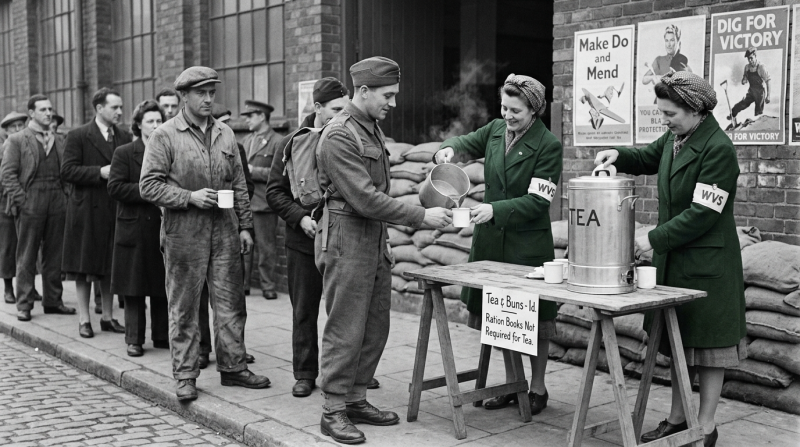
Tea sustained Britain through two world wars. During both conflicts, the government classified tea as an essential commodity and maintained imports under rationing systems. Tea was issued to troops on every front. The phrase “put the kettle on” became a national reflex in times of crisis — and remains one today.
The post-war decades brought fundamental changes to how tea was sold and consumed. The tea bag, first popularised in the United States, entered the British market in the 1960s and gradually overtook loose-leaf tea. By the end of the century, more than 95% of tea consumed in Britain came in bags.
Meanwhile, the structure of the tea trade itself was consolidating. Many of the small, specialist London tea houses that had operated since the Victorian era were absorbed into larger companies, or adapted by shifting to private label supply, export, or specialty blending. Keith Spicer Ltd., founded in 1934 and now the blender of ASHBYS teas, is among the firms that thrived by focusing on craft — on the bespoke creation of blends for customers who cared about what was in the cup.
Tea in Britain Today
The United Kingdom remains one of the world’s largest tea-consuming nations. The UK Tea & Infusions Association estimates annual consumption at approximately 100 million cups per day. The ritual of a cup of tea — offered to guests, shared among colleagues, brewed in solitude — continues to occupy a central place in British daily life.
The twenty-first century has also seen a renewal of interest in specialty tea: single-origin leaves, artisan blends, and the rediscovery of brewing methods that reveal complexity rather than convenience. In this context, the heritage of British blending — the skill of tasting, selecting, and combining — is not a relic. It is a living tradition, and one that ASHBYS OF LONDON carries forward.
Sources:
- Illustrated London and its Representatives of Commerce (1893), The London Printing and Engraving Co.
- History of Advertising Trust, Catalogue Reference HAT60/2
- Ghostsigns.co.uk: “James Ashby & Sons (Rose Brand Fine Teas),” December 2008
- Kidderminster & District Archaeological & Historical Society: The Victory Tea Company, Kidderminster 1931–1965
- UK Tea & Infusions Association (tea.co.uk)
- Markman Ellis, Richard Coulton, Matthew Mauger, Empire of Tea: The Asian Leaf that Conquered the World (Reaktion Books, 2015)
- Londonist / History of Ceylon Tea: “A History of Tea in London”

コメント